Let’s talk about psychological stamina (I’ve been digging into the research a bit – it’s time for the #NerdStuff).
I first learned the term when I started studying the COM-B model, and it’s part of psychological capability.
Basically, when you want someone to do a behavior, one of the questions is “do they have the knowledge and skills to do the behavior (the psychological capability)?” If they don’t, then training and practice should be part of your solution.
But psychological stamina is a little different. It’s really the question of whether or not someone can keep expending effort at the required level needed by a behavior that requires vigilance over time.
For example, I could take a training course on screening the luggage x-rays at the airport. I could know what I’m looking for, and know how to spot dangerous objects, but I could lack the ability to do it for any length of time.
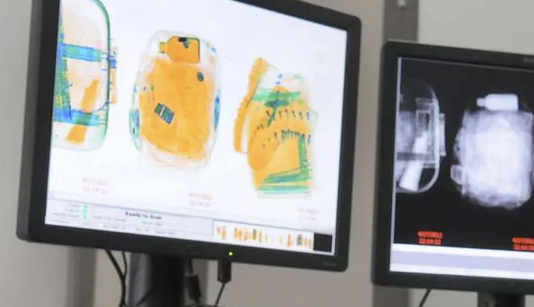
Some regulations limit the amount of time a worker can be scanning luggage to 20 minutes, based on the assumption that accuracy and speed will decline the longer someone does it, which is referred to as vigilance decrement (Buser et al 2023, Grier et al 2003).
All these fun terms are important right now because of (you guessed it, right?) our professional use of AI, and the required psychological stamina.
Diligence for reviewing outputs is a key element for successful use of AI (as I may have mentioned a few times before). I just learned the term verification load for the effort required of software developers to verify code written by AI, and trust calibration for being able to judge the amount of trust or skepticism required when verifying that software code (Fan et al, 2026).
So, yeah, these are a few of things we will need to care about going forward:
Psychological Stamina
Vigilance Decrement
Verification Load
Trust Calibration
(Whew, anybody feeling their own psychological stamina starting to flag at the prospect of learning about these? I know I have about a 10-20 minute limit, and then I want a cookie.)
I’ll be posting more on this in the future, but for now I have more questions than answers about all of this, including:
- Is vigilance more of a learnable skill or more of a characteristic we hire for?
- How can the interface be designed to support verification?
- What kind of governance does the organization need to put in place?
- Are we going to need to limit the amount of time we can expect people to be vigilant?
- Is trust calibration a skill that can be taught?
I’m interested in what you think. Which of these might impact you and your organization the most?
—————————————–
If you’d like to listen to me process some of this with some AI experts, I’ll be doing a guest stint as a co-host for the Mindtools Podcast in late September https://podcast.mindtools.com/
If you’d like to dig into COM-B and behavioral design, check out my upcoming workshop (Sept 24) From Knowing to Doing: Three Tools for Diagnosing Behavior Change.
If you’d like to do a nerdy deep dive on skill development (including a chapter on skills in the age of AI), my new book is available for pre-order: Design for How People Build Skills. Use code BUILDSKILLS for 35% off at the publisher website.

References:
Buser, David, Adrian Schwaninger, Juergen Sauer, and Yvonne Sterchi. 2023. “Time on Task and Task Load in Visual Inspection: A Four-Month Field Study with X-Ray Baggage Screeners.” Applied Ergonomics 111: 103995. https://doi.org/10.1016/j.apergo.2023.103995
Grier, Rebecca A., Joel S. Warm, William N. Dember, Gerald Matthews, Traci L. Galinsky, and Raja Parasuraman. 2003. “The Vigilance Decrement Reflects Limitations in Effortful Attention, Not Mindlessness.” *Human Factors* 45 (3): 349–59. https://doi.org/10.1518/hfes.45.3.349.27253
Fan, Guangrui, Dandan Liu, Lihu Pan, and Rui Zhang. 2026. “When Help Hurts: Verification Load and Fatigue with AI Coding Assistants.” In Proceedings of the 2026 CHI Conference on Human Factors in Computing Systems. Association for Computing Machinery. https://doi.org/10.1145/3772318.3791176